Social engineering & intercultural communications in the digital

This is one more principally new discipline for our institute, University, and even for Eastern Europe. Its potential impact on shaping a modern manager is difficult to exaggerate now. The discipline is mandatory for all our students to learn.

The discipline is dedicated to study of how modern digital technologies and products change and deform the usual culture of human communication, influence search and critical thinking, change values, change truth to ‘post-truth’ & fakes, and most importantly – replace the main thing with something secondary & insignificant. This is how social engineering technologies work, but today they have become much more influential, aggressive & widespread.

Of particular importance are the newest technologies of neural networks, in particular, the revolutionary ChatGPT, which brings potentially critical changes to ordinary business and social relations, thereby acting as a powerful means of social engineering and, as a result, a completely new social structuring of humanity in the 21st century. Instead, a modern leader & public person should understand this, as well as the fact that ordinary personal human communication & human empathy will once again become an exceptional and valuable asset.

Practical classes will be filled with discussion of numerous cases from different countries & preparation of recommendations for politicians at different levels.

Volume of study load: 5 ECTS credits.

  • to form basic knowledge about the essence, opportunities & risks of social engineering and intercultural communications in the field and skills in the field of designing measures of intersectoral policy from the point of view of private business, protection & justification of the best solutions for problem situations
  • to understand clearly some main cause-and-effect relationships of how the main technologies of social engineering work in the digital environment
  • to understand how to build new human-centered relationships, guided by the principles of ethics, sustainability, mutual respect & ideals of the common good in the broadest sense.
  • Hadnagy Ch. (2020). Social Engineeering: the science of human hacking / 2nd ed. New Yorl : Wiley. 362 c.
  • Pocheptsov G. (2019). Cognitive wars in social media, mass culture and mass communications (in Russian)
  • Pocheptsov G. (2019). The departure of media from the information space to the virtual. URL : https://ms.detector.media/mediaanalitika/post/23801/2019-11-17-ukhod-medya-yz-ynformatsyonnogo-prostranstva-v-vyrtualnoe/ (in Russian)
  • Pocheptsov G. (2019). Elites, citizens and communications: about three factors of the country’s development. URL : https://detector.media/withoutsection/article/168731/2019-07-07-jelyty-grazhdane-y-kommunykatsyy-o-trekh-faktorakh-razvytyya-strany/ (in Russian)
  • Fry H. (2018). Hello World. How to be a man in the age of machines
  • Kholod O. (2016). Hypermarket of consciousness and mass media: monogr. T. 2: Social engineering of mass media. Kyiv. 329 p. (in Ukrainian)
  • Come On! Capitalism, Short-termism, Population and the Destruction of the Planet – A Report to the Club of Rome / E. von Weizsäcker, A. Wijkman. Springer, 2017. 232 p.
  • Schwab K. (2017). The fourth industrial revolution. Shaping the fourth industrial revolution. URL : www.weforum.org/about/the-fourth-industrial-revolution-by-klaus-schwab.
  • Allman K. (2017). Impact Investment: a practical guide to investment process and social impact analysis. New York : Wiley. 304 c.
  • Haskel, J., Westlake S. (2017). Capitalism without Capital: The Rise of the Intangible Economy. Princeton Univ. 288 с. DOI: 10.2307/j.ctvc77hhj

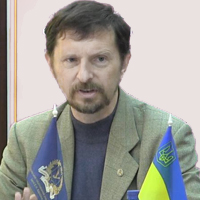
Tutor

Oleh Kulinich

PhD in public administration, associate professor

2023 © All rights reserved